Pioneering Research in Cellular Aging, DNA Damage, and Neural Development at the University of Florida
Explore Our Research
The Jones Lab is featured on the McKnight Brain Institute website.
Exploring age-related metabolic changes in neurons during normal cognitive aging and dementia, with a focus on identifying therapeutic entry points through metabolic pathways.
Developing human-cell-based systems to study what separates healthy aging from dementia, enabling discovery work in a controlled, scalable in vitro setting.
All research uses genetically diverse patient-derived cells rather than mice or uniform cell lines, making findings more representative of the real human population.
While most Alzheimer's research targets rare familial mutations, the Jones Lab focuses on the 95% of cases with no known genetic cause, where metabolic changes may be key.
Cellular aging, DNA damage, neural development.
Flip to read more about our researchWe combine human stem cell models, genomics, and functional assays to understand how aging impacts neural systems and identify interventions that preserve cognition and resilience.
Flip backCRISPR, iPSC systems, sequencing, bioinformatics.
Flip to read more about our researchWe leverage CRISPR engineering, iPSC-derived neural models, multi-omics (RNA/ATAC), and computational analysis (Python/R) to map mechanisms and test causality.
Flip backWe're hiring — students, postdocs, and staff.
Flip to read more about our researchIf you're excited about neuroscience, aging, and human cell models, send a CV + brief note describing your interests and experience.
Flip backUnderstanding the cellular mechanisms of aging and their contributions to cognitive decline through advanced genomic techniques and bioinformatics analysis.
Expert in genetic engineering (CRISPR/Cas9), stem cell culture, human dermal fibroblast derivation, and transdifferentiation techniques.
Modeling brain disorders using induced pluripotent stem cells, organoids, and human neural development systems for disease research.
Investigating metabolic changes in aging cells and their role in neurodegeneration, with focus on glucose metabolism and energy production.
Developing and optimizing cutting-edge sequencing techniques with advanced bioinformatics skills in bash, python, and R for large data analysis.
Creating innovative disease models to study neurodegenerative conditions including Alzheimer's disease and Alexander disease using human cell systems.
Our groundbreaking research published in Science demonstrates how restoring glucose metabolism in the hippocampus can rescue cognitive function across multiple Alzheimer's disease pathologies.
We discovered that glucose hypometabolism is a key driver of cognitive decline and that targeted metabolic interventions can restore memory formation and synaptic plasticity.
Using innovative nucleoside analog incorporation mapping, we've identified genome repair sites in human neurons, revealing how DNA damage accumulates in the aging brain.
This work, published in Science, provides the first comprehensive map of DNA repair activity in living human neurons and demonstrates the vulnerability of specific genomic regions.
Our Cell Reports study reveals how mutations in GFAP (Glial Fibrillary Acidic Protein) disrupt organelle distribution and function in human astrocytes, leading to Alexander disease pathology.
Using patient-derived cells and CRISPR engineering, we demonstrated the molecular mechanisms underlying astrocyte dysfunction in neurodegenerative disease.
Published in Nature Biotechnology, this work established protocols for generating functional serotonin neurons from human pluripotent stem cells, opening new avenues for studying mood disorders and depression.
These neurons exhibit authentic serotonergic properties and provide an invaluable model for drug screening and disease mechanism studies.
Our comprehensive review in Nature Reviews Neurology examines how neural cell states change during aging and in age-related diseases, providing a framework for understanding neurodegeneration.
This work synthesizes current knowledge on cellular aging mechanisms and identifies key pathways for therapeutic intervention.
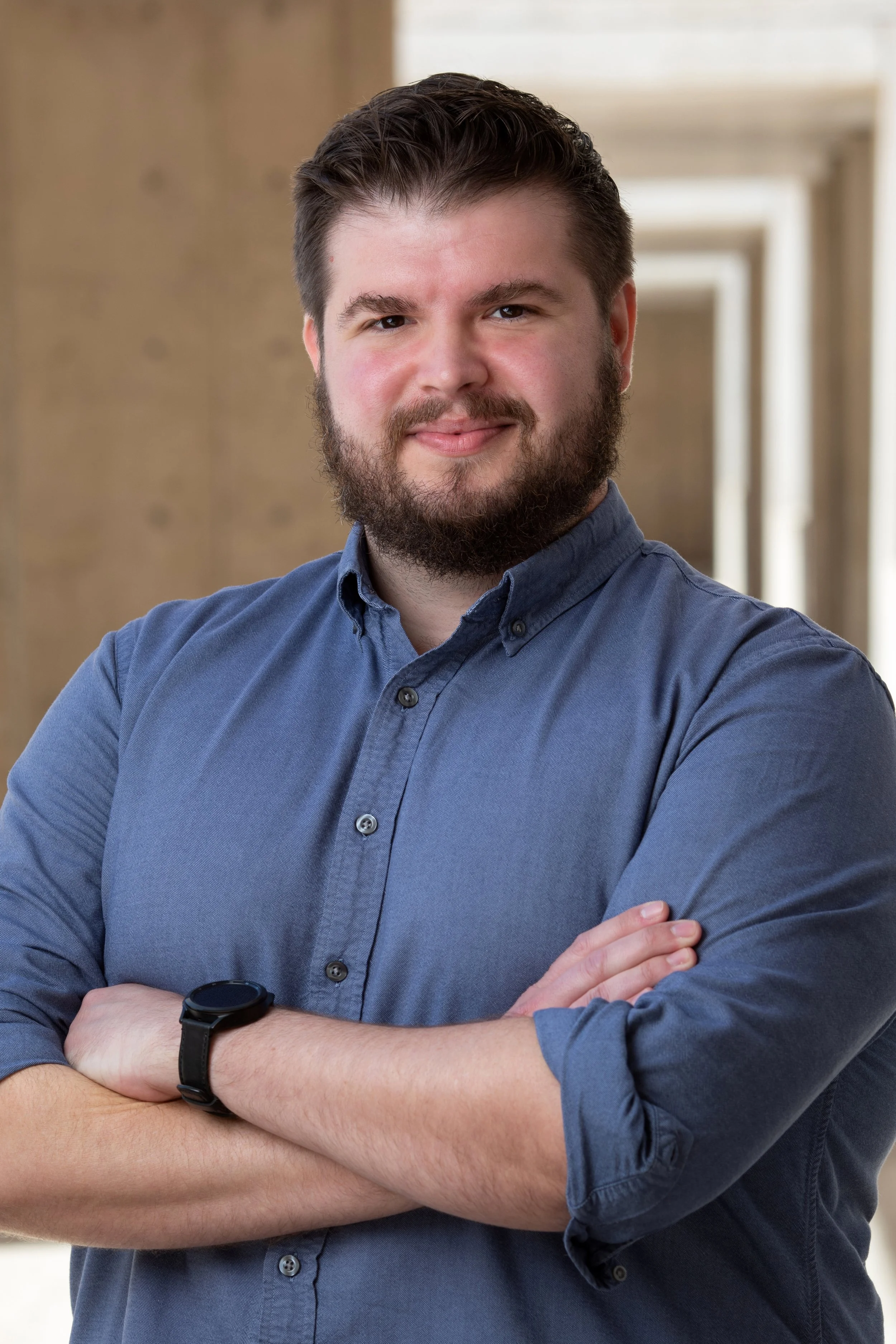
Dr. Jeffrey R. Jones is an Assistant Professor of Neuroscience at the University of Florida College of Medicine. His lab studies age-related metabolic changes in neurons during normal cognitive aging and dementia, and how those changes affect DNA, with the goal of uncovering new therapeutic avenues.
Dr. Jones completed his PhD at the University of Wisconsin-Madison in the laboratory of Dr. Su-Chun Zhang, where he used iPSCs and CRISPR to model Alexander disease in human astrocytes, revealing how mutations in the GFAP gene disrupt organelle architecture and cellular function. He then trained as a postdoctoral researcher under Dr. Fred Gage at the Salk Institute for Biological Studies, where he helped pioneer a model that directly converts aged human skin cells into neurons, preserving the donor's age in the process. This system makes it possible to study what separates healthy aging from dementia in living human neurons.
The Jones Lab takes a distinct approach: all research is conducted on human cells in culture, drawing statistical power from the genetic diversity of real patients rather than a single cell line or genetically identical mice. The lab focuses on the roughly 95% of Alzheimer's cases with no known genetic cause, investigating whether metabolic changes in aging neurons could serve as both a driver of neurodegeneration and a therapeutic target, with implications that extend well beyond Alzheimer's to cognitive aging more broadly.
Advanced genetic engineering techniques
iPSC derivation and differentiation
3D tissue modeling systems
RNA-seq, ATAC-seq, ChIP-seq
Python, R, Bash scripting
Neurodegeneration research models
Contact Jeff with a CV and cover letter.
Fill out this form